
The mistake almost everyone makes first
If the door still goes up and down, most people leave it completely alone. It's tempting — nothing looks broken, replacing anything feels wasteful, and the door has probably outlasted two cars and a roof. But "it still works" and "it's still safe" are two different questions. A garage door opener from the 1980s or early 1990s can run perfectly smoothly and still be missing safety features that didn't exist yet when it was built. The door isn't failing. It's just old in ways you can't see from the kitchen.
What actually needs retrofitting
Auto-reverse photo-eye sensors
Openers made before 1993 generally don't have the photo-eye sensors near the floor that stop the door from closing on a kid, a pet, or a bike. If your opener has no small sensor boxes on either side of the track, roughly knee height, it doesn't have this protection. This is the single most important retrofit on this list — it's a safety gap, not a style preference, and it's worth doing even if nothing else about the door bothers you.
Spring containment cables
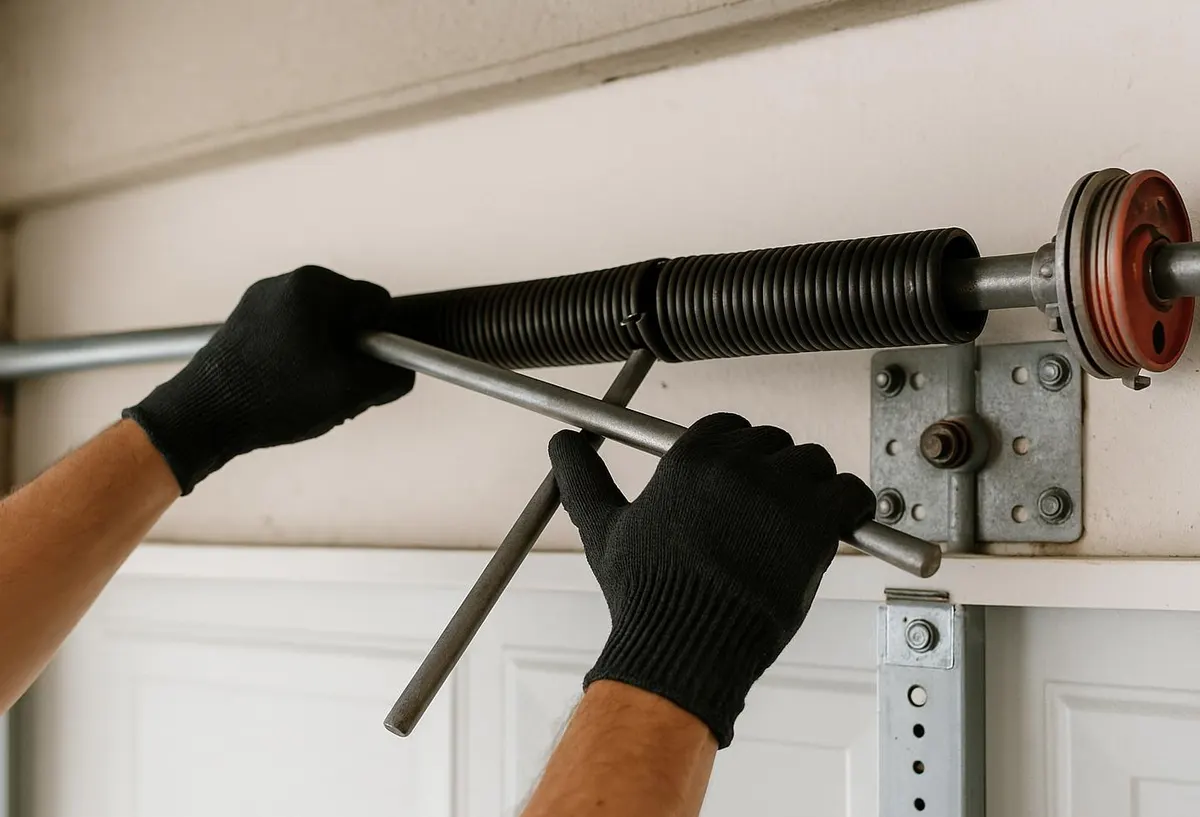
Older torsion and extension springs can snap after years of cycling, especially with the heat and humidity swings common here. Without a containment cable running through the spring, a broken spring can whip loose with real force. Retrofitting containment cables is inexpensive compared to the rest of the system and doesn't require replacing the spring itself unless it's already worn.
Wind-load bracing
Doors installed decades ago were often built to older, lighter standards. With hurricane season still active into November along this part of Alabama, a door that bows or flexes in sustained wind is a real risk, not just cosmetic. Retrofit bracing kits reinforce the panels and track anchoring without requiring a full door replacement, and this is a good season to get it checked before any late-season systems move through.
A working emergency release
Many older doors have a manual release handle, but after years of humidity and rust, the mechanism can seize or the cord can be missing entirely. If the power goes out during a storm, you need to be able to open the door by hand. This is a five-minute check, and if it's stiff or stuck, it's worth freeing up or replacing now rather than during an outage.
What's fine to leave alone
Not everything original is a problem. A solid wood door with no rot, warping, or delamination can still be structurally sound — wood from that era is often heavier-gauge than what's sold today, and swapping it out for the sake of modernizing isn't necessary if it's been maintained. Simple chain-drive openers with no smart features are reliable workhorses; noisy doesn't mean failing, it usually just means the chain needs tension and lubrication. And heavy steel panels without active rust are worth keeping — repainting and resealing the edges against moisture is cheaper and just as effective as replacing them.
The trade-off to weigh: a full system replacement runs into the thousands depending on size and materials, while targeted retrofits — sensors, containment cables, bracing, release hardware — typically run in the low hundreds each. If the door and panels are sound, retrofitting the safety gaps is almost always the better value than starting over.
When to call Tanner Garage Door
If you're not sure whether your opener has working sensors, whether your springs have containment cables, or whether your door would hold up in a wind event, that's exactly what a maintenance visit is for. Our Garage Door Maintenance service checks all of this in one visit, and if your springs are original and unprotected, our Spring Replacement service includes proper containment as a matter of course — not an upsell. We'll tell you plainly what's a safety issue, what's cosmetic, and what can wait.
If you're in Tanner, Decatur, Athens, Hartselle, Somerville, Priceville, Madison, or Huntsville and you've got a garage door that predates your car, give Tanner Garage Door a call. We'll walk the whole system with you and settle the argument for good.